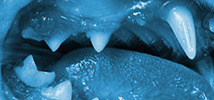
The most commonly fractured tooth in
cats is the canine tooth. Often, just the very tip of
these teeth are fractured. Unfortunately the pulp
(blood supply and nerve of the tooth) extends to
the tip of the canine tooth. The wait & see
approach to a fractured tooth is not acceptable in
that cats are designed by nature to “hide” their
discomfort. Nearly all of teeth with exposed pulp
are painful and most will become infected. We
recommend that these patients have dental x-rays,
and either root canal therapy or extraction
therapy.
The goal of root canal therapy is to
preserve the function of a tooth that has pulpal
exposure. It involves cleaning and sterilization of
the root canal using a series of files and
disinfectant. This is followed by sealing the canal
with a cement and inert material. Finally the
fracture site and access hole(s) are restored using
a composite resin material. (The cost of root canal
therapy is typically $500-600)
Extraction therapy is also commonly preformed.
This requires a mucogingival flap, surgical
extraction, and tension free suturing to ensure
proper healing. However, one-third of cats may
develop a lip ulcer when the maxillary canine is
extracted from contact of the ipsilateral
mandibular canine tooth. (typical cost for
extraction therapy will range $300-400)

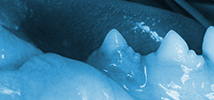
Restored tooth |
|