Base Narrow Canine
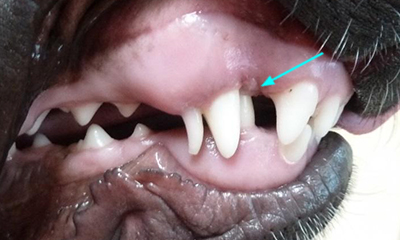
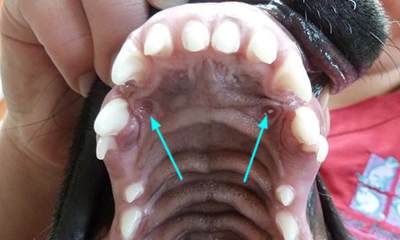
Base narrow canine teeth is a condition in which the lower canine teeth strike the palate causing pain in your pet.
What you need to know…
- Can affect young puppies when the deciduous teeth erupt too narrow and contact the palate.
- Can occur in any breed but is more common in breeds with longer narrow facial structure such as Standard Poodles, Collies, Labradors, and German Shepherds.
How a Base Narrow Canine may look:
Possible Therapy / Treatment:
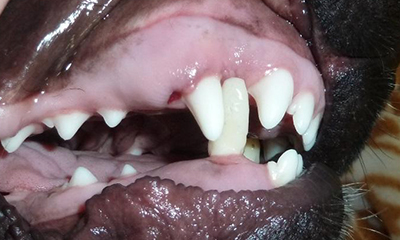
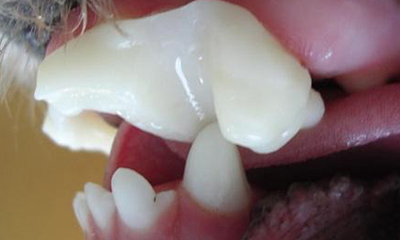
Therapy / treatment depends on the tooth orientation, age of the pet and his/her disposition. Some possible therapies / treatments are:
Schedule an appointment to have your pet evaluated by clicking on the “Get In Touch with Us” button.
LEARN MORE
This is a painful condition as the lower canines will strike the roof of the mouth (palate).
Remember, the upper jaw (maxilla) is wider than the lower jaw (mandible). Base narrow canine teeth can occur in any breed but is more common in breeds with a longer narrow facial structure such as: Standard Poodles, Collies, Labradors, and Shepherds. This condition can affect young puppies when the deciduous teeth erupt “too narrow” and contact the palate. More commonly this condition affects young adults at 6 months of age, when the lower permanent canine teeth erupt in an upright orientation. The adult canine teeth will eventually strike the palate causing pain.
Therapy depends on the tooth orientation, the age of the pet and his/her disposition. Many cases are treated with composite tooth extensions (incline capping therapy), while others will require an incline plane (bite plate) to be fabricated to apply tipping forces to the lower canine teeth. These techniques apply specific tipping forces on the misaligned teeth over 4-8 weeks.