Persistent Deciduous Teeth
Similar to baby teeth in humans, these are teeth that will fall off after maturity but persistent ones will negatively impact your pet’s bite and comfort.
What you need to know…
- Persistent tooth/teeth will commonly direct an erupting permanent tooth/teeth into an abnormal position.
- Untreated persistent teeth are prone to tartar accumulation and gum inflammation.
- Common in toy breeds like Yorkshire Terrier, Maltese, Toy Poodle, and Chihuahuas.
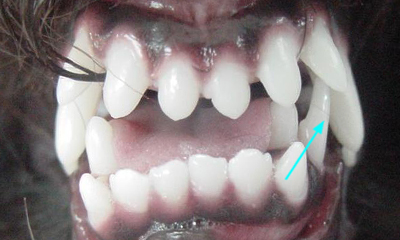
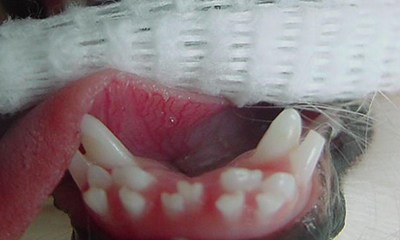
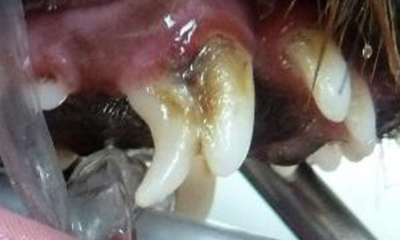
How persistent deciduous teeth may look:
Possible Therapy / Treatment:
Extraction therapy is performed in a manner designed to prevent root fracture or damage to the immature/erupting permanent tooth.
Schedule an appointment to have your pet evaluated by clicking on the “Get In Touch with Us” button.